
Searching Decatur County Criminal Dockets
Georgia gives Decatur County two portals in one place. The Georgia Courts’ E-Access page lists Decatur State and Decatur Superior as providers for Tyler’s re:SearchGA case portal. An account is required. The route is statewide. But the court choice stays local: pick Decatur Superior for a felony search and Decatur State for a misdemeanor or State Court traffic matter. The live endpoint blocks some loads with an HTTP 403 error. Availability can change. A failed load does not prove a case is absent.
Enter the exact case number when you have it. Without one, search by party name, issuing court, and the date or case type printed on the notice. A citation written inside Decatur County may still belong to Bainbridge Municipal Court rather than the county clerk. For any Decatur County name or number search, use the Decatur County case lookup route. Then check it against the court named on the paper.
- Read the citation, indictment, accusation, or court notice and identify the court, case number, and next date.
- Open Georgia Courts E-Access, choose Decatur State or Decatur Superior, and sign in through the official portal.
- Use the exact case number first; if it is not known, search the party name with the spelling and date context available.
- Open the case description and read the filings, hearings, motions, disposition, and status entries in date order.
- Call the responsible clerk for a missing entry, a restricted document, or a certified copy rather than treating a portal result as the full file.
Decatur County Criminal Docket Search Order
The re:SearchGA guide describes the tools plainly. A Cases tab and a Hearings tab sit beside a Search By control and an Advanced control. Search and Reset buttons sit alongside. You can also sort by newest case-filed date, oldest case-filed date, or case number. Case Details shows the case number and type. Parties, attorneys, judicial officers, filings and documents, hearings, and status information appear there too. Decatur County dropdown values vary, so explore the choices yourself.
Write down the court choice and search mode next to any result. Two searches can return different lists, and that small record explains why. A Decatur County document link may lead to a fee-controlled image. A file-stamped copy is not automatically a certified copy. Ask the clerk. Bring questions about an official copy, a sealed item, or any conflict between a case entry and a current calendar.
| Portal control | What it helps locate | Local caution |
|---|---|---|
| Cases / Hearings | Case registers or hearing-oriented results | Choose the Decatur court that owns the matter. |
| Search By | The field used for the query | The live local option list was not visible during the 403 condition. |
| Search field | Case number, name, or another selected value | Use the identifier exactly when it is known. |
| Advanced | Additional search criteria | Record filters so the search can be repeated. |
| Sort By | New, old, or case-number order | Sorting changes the view, not the case history. |
| Case Details | Parties, counsel, officers, filings, and hearings | Read each dated entry instead of inferring an outcome. |
For the court-division starting point, use the official Decatur Clerk court divisions page.
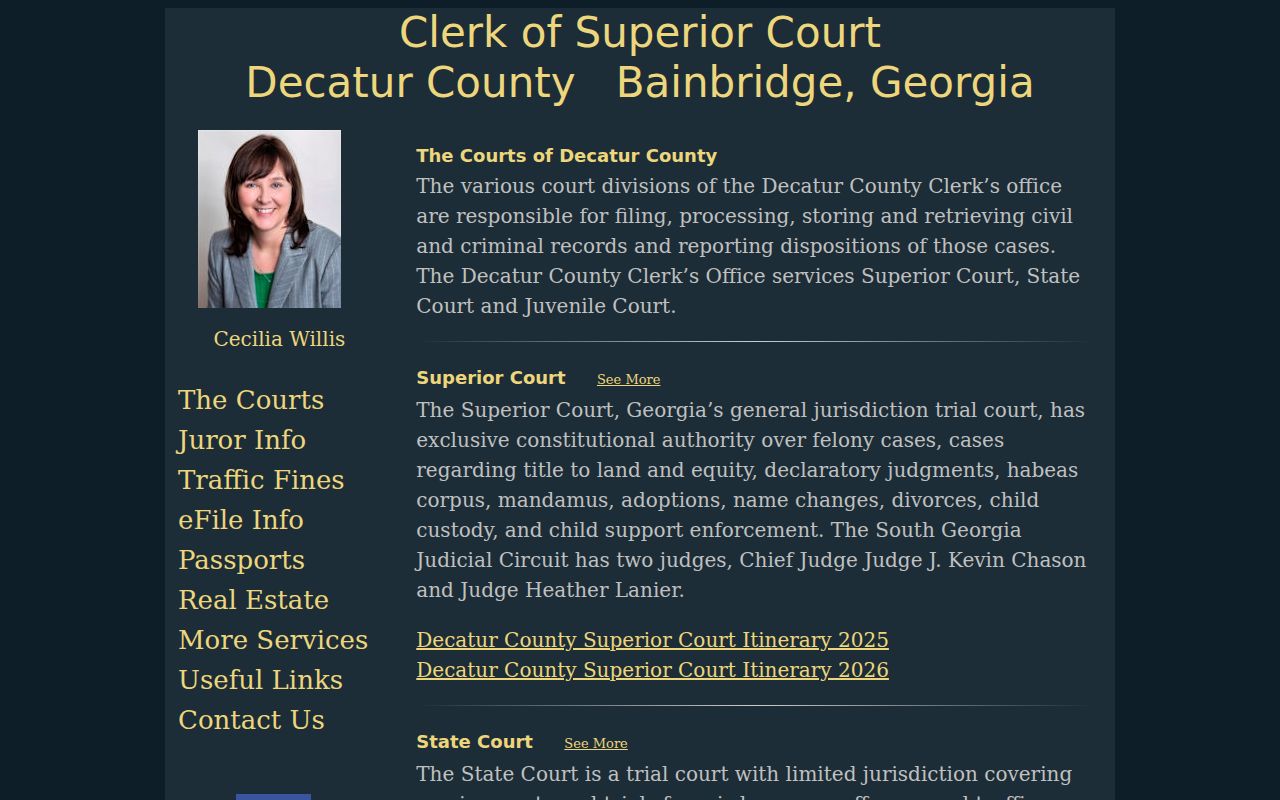
The Decatur County court map separates Superior, State, Juvenile, Probate, and Magistrate services. That split keeps a Decatur County criminal search from starting in the wrong record family.
Decatur Clerk of Superior Court
112 West Water Street
Bainbridge, GA 39817
229-248-3025
The Decatur County clerk lists PO Box 336, Bainbridge, GA 39818, and fax 229-248-3029. When a docket or copy question goes unanswered online, the counter, phone, mail, fax, and contact form are the fallback routes. Treat the contact form as a routing aid only; it does not mean a formal copy request has been accepted.
Inside a Decatur County Criminal Docket
A Decatur County public register can show much. Expect the case number and type, filing date, court, parties, attorneys, judicial officers, filings, documents, hearings, and disposition or status entries. What appears depends on the court, the case type, your account role, and whether an image exists. A charge or arraignment entry records an event, nothing more. It does not prove a later hearing occurred. Nor does it show that the person received any particular result.
| Case number and type | The identifier and court category used to keep the criminal matter; preserve the exact format. |
|---|---|
| Court and filing date | The Decatur court that owns the case and the date the case or charging paper entered the system. |
| Parties and counsel | Named parties, attorneys of record, and any party labels visible in the public result. |
| Charging event | An indictment, accusation, citation, or other charging entry when it is publicly shown. |
| Hearings and settings | Arraignment, motion, pretrial, trial, sentencing, or other dated settings. |
| Filings and documents | Documents or docket events linked to the case; access may be restricted or fee-controlled. |
| Disposition and status | The closing or current status entry. Read the actual wording and do not infer from a calendar or payment entry. |
No complete felony or misdemeanor codebook exists for local case numbers. The Decatur Clerk’s civil examples cannot be reused as criminal formats, and a federal format is separate again. A Decatur County criminal number may return nothing. Check the court, punctuation, and year. Ask whether the record is too new or restricted before calling the clerk.
The Decatur Superior Court page covers the felony court’s jurisdiction. It also gives the local route for Superior Court information.
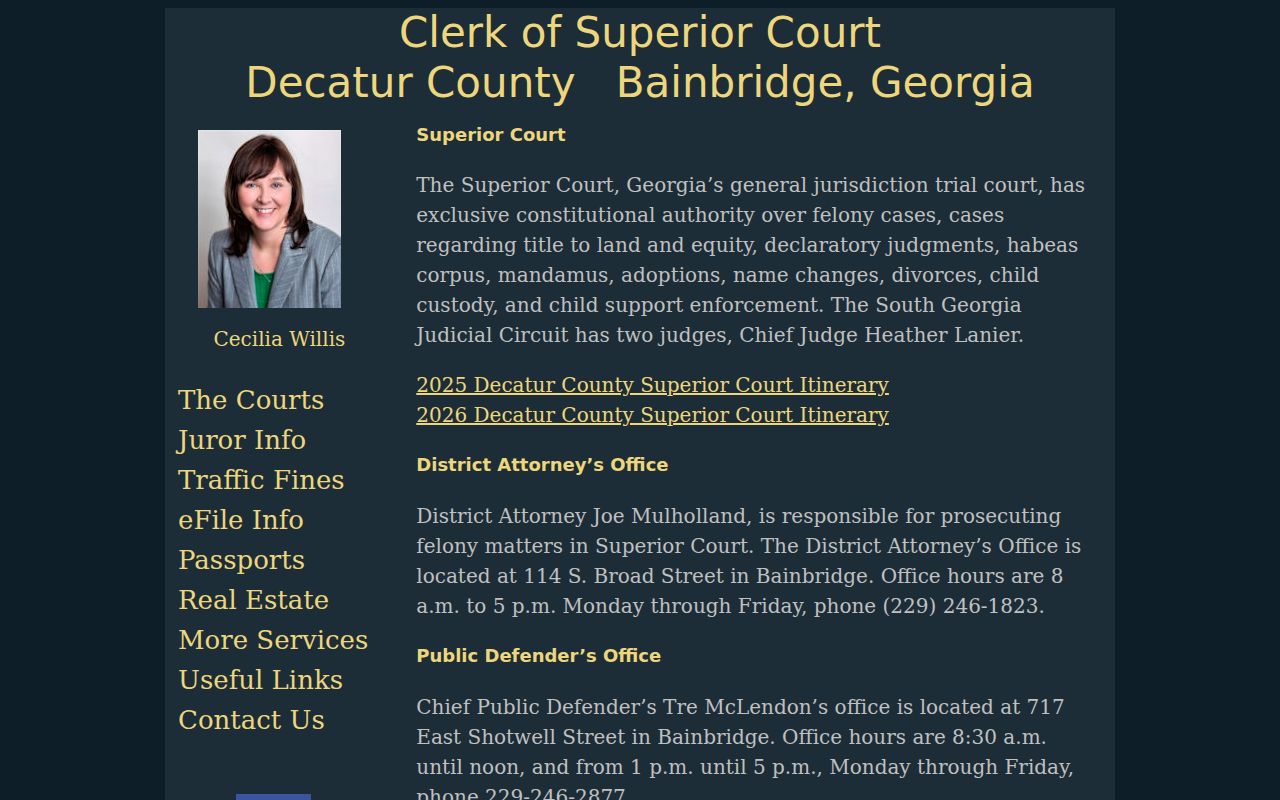
Superior Court material can include the charging and sentencing records held by the Clerk of Superior Court. Even so, a public index does not guarantee that every underlying document is open.
Decatur County Criminal Docket Terms
Docket entries are short and dated. They compress a long case. In Decatur County, the Superior term schedule moves through grand-jury recall, arraignment, motions, pretrial, and trial stages. State Court materials use arraignment, non-jury trial, and jury-trial language. The plain meanings here help a reader separate a setting from a result.
- Indictment
- A grand-jury charging instrument associated with felony prosecution in the Superior Court system.
- Accusation
- A charging instrument filed by the proper prosecuting authority in a case allowed by Georgia law.
- Arraignment
- A scheduled criminal court event. It is not the same as a conviction or final disposition.
- Pretrial
- A scheduled event before trial, often shown with motions, deadlines, or case-management work.
- Disposition
- The outcome or closing action entered in the case. The exact entry controls its meaning.
- Nolle prosequi
- A prosecutorial disposition phrase. Read the complete entry and do not add a meaning the record does not state.
The Decatur County clerk stores indictments, accusations, sentences, sentencing packages, and post-conviction materials. A file-stamped document proves filing only. A certified copy is authenticated by the responsible clerk. Those are different Decatur County records. The register may link to both. See the official Decatur State Court information for the lower criminal path.
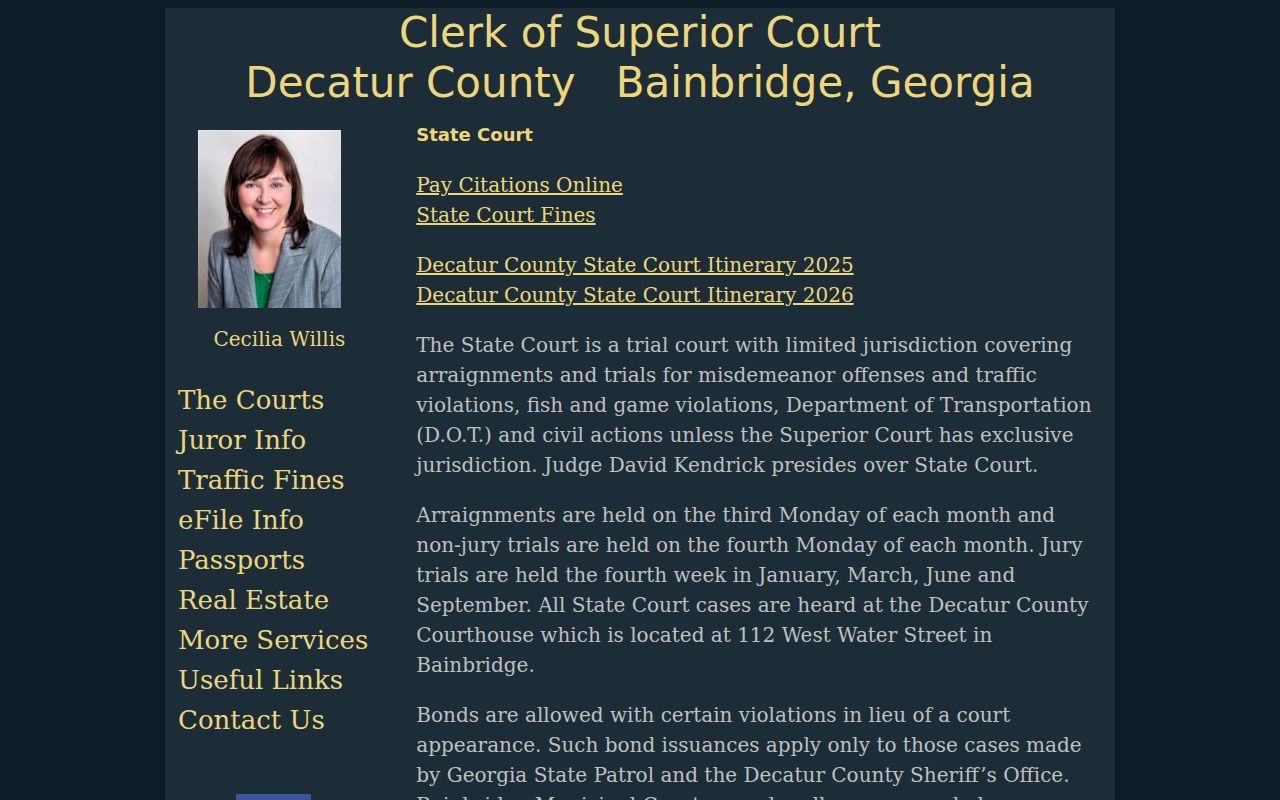
State Court handles misdemeanor arraignments and trials, traffic, fish and game, and Department of Transportation matters. It also takes civil actions unless a matter is exclusive to Superior Court.
How a Criminal Case Moves
A Decatur County criminal docket starts with a charging event and grows from there. Settings, filings, motions, orders, and a final closing entry pile up. They do so over the life of the case. Where the case lands depends on the charge. Decatur County felonies travel the Superior Court term path. Misdemeanors and traffic matters move through State Court when the citation or charge is filed there. A city citation may stay put in a municipal court. So the issuing agency's name matters from day one.
Docket flow: Charge Filed › Arraignment › Motions and Pretrial › Plea or Trial › Disposition › Sentencing
Treat the typical case flow as a reading aid. It is not a rule that every criminal docket will match step for step. Some cases skip stages entirely, and others take them out of order. A hearing entry only sets a date. It proves nothing more until the record itself says what happened at it. Likewise, a reset does not dismiss anything. Paying a fine alone is not a complete disposition. The dated docket entry and any order it links to should always be read side by side. Draw your conclusion only then.
South Georgia circuit calendars list Decatur County criminal trial settings alongside civil and remote sessions. That gives you a cross-check. Before treating a listed date as current, compare the calendar against the case register. Do that for your own Decatur County case.
Decatur County Criminal Docket Calendar Rhythm
The published rhythm for Decatur County State Court is easy to spot. Arraignments fall on the third Monday of each month. Non-jury trials sit on the fourth Monday. Jury-trial weeks run in January, March, June, and September. Under the 2026 itinerary, arraignments, trials, pretrials, motions, and other hearings generally start at 8:30 a.m. unless a judge orders otherwise. Treat those as planning clues. They cannot replace the case notice or the current Decatur County court dates.
The Decatur County Superior term PDF runs on its own sequence: grand jury or grand-jury recall, arraignment, motions due, pretrial, and trial blocks. Future fields on a posted sheet are sometimes blank. A Decatur County term sheet may therefore lack a final date for some events. For criminal trial calendars and WebEx criminal days, the circuit calendar index is the place to look. When an online setting conflicts with a Decatur County notice, check the current PDF. Or call the clerk.
Put the two tools to different uses. The calendar tells you where a setting fits in the schedule; the docket tells you what was filed or entered. Neither one, standing alone, proves a hearing happened or that a pending charge ended.
Courts That Hold Criminal Dockets
Criminal records in Decatur County are divided by jurisdiction. Decatur County Superior Court is the general-jurisdiction trial court. It alone holds constitutional authority over felony cases. Misdemeanor arraignments and trials go to Decatur County State Court. That court also handles traffic, fish and game, and Department of Transportation matters. Bainbridge Municipal Court covers traffic and ordinance cases inside the city limits. Juvenile matters follow special access rules. So do not assume they will surface in an adult search.
| Court | Criminal docket focus | First route |
|---|---|---|
| Decatur County Superior Court | Felony charging, motions, trials, sentencing, and post-conviction records | Decatur County Clerk and re:SearchGA Decatur Superior |
| Decatur County State Court | Misdemeanor, traffic, fish and game, and DOT matters | State Court clerk and re:SearchGA Decatur State |
| Bainbridge Municipal Court | City traffic and ordinance matters within Bainbridge | Municipal citation portal and 229-243-0132 |
| Juvenile Court | Juvenile matters and related orders | Clerk or court routing, subject to access rules |
A search in the wrong Decatur County court can mimic a missing case. Confirm which court issued the case before you change the name search or conclude that a Decatur County case was never filed.
Decatur County Accountability Court Docket
Decatur County sits in the South Georgia Judicial Circuit. The circuit runs an Accountability Court along with a Decatur County Drug Court program. The program keeps its own public calendar and civic information. Treat that calendar as context, nothing more. A graduation listing or an assignment to the program does not settle the underlying Decatur County criminal case. Nor is it a final disposition there. For true status, read the case register and the court’s actual order. Program details live on the South Georgia Judicial Circuit Drug Court page.
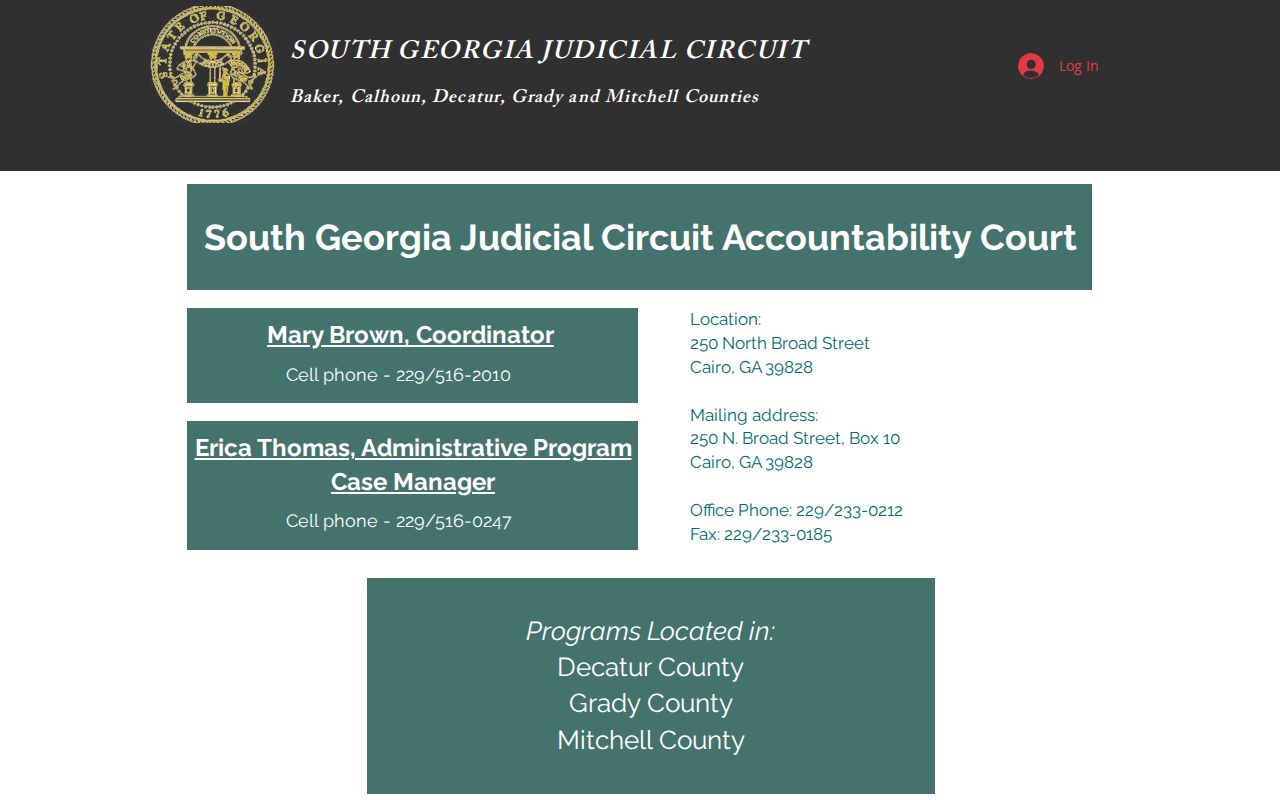
The Decatur County Accountability Court docket adds helpful context, but it is not the official case record. A program calendar cannot tell you a person's outcome, and no docket search of it replaces what the clerk holds.
Sealed Dockets and Public Access
Most Decatur County court records are open to the public. The catch comes from the Georgia Attorney General. Superior, State, Probate, and Magistrate Courts sit outside the Georgia Open Records Act. So a standard open-records request aimed at the executive branch will not pry loose a criminal docket kept by the Clerk of Superior Court. Access to those court records runs through the responsible court instead. It is guided by clerk procedures, court rules, and statutes. That is the honest route to a Decatur County case lookup.
Access rules in plain English:
Uniform Superior Court Rule 21 describes public inspection and the process for restricting access when a legal or procedural limit applies.
Uniform Superior Court Rule 36.17 places redaction duties on parties and generally limits visible Social Security, account, and birth-date details.
Georgia Attorney General open-government guidance distinguishes public court records from the Open Records Act process used for covered agencies.
The 2026 signed legislation on sealing and unavailability should be checked for current statutory conditions; eligibility belongs with the court or counsel.
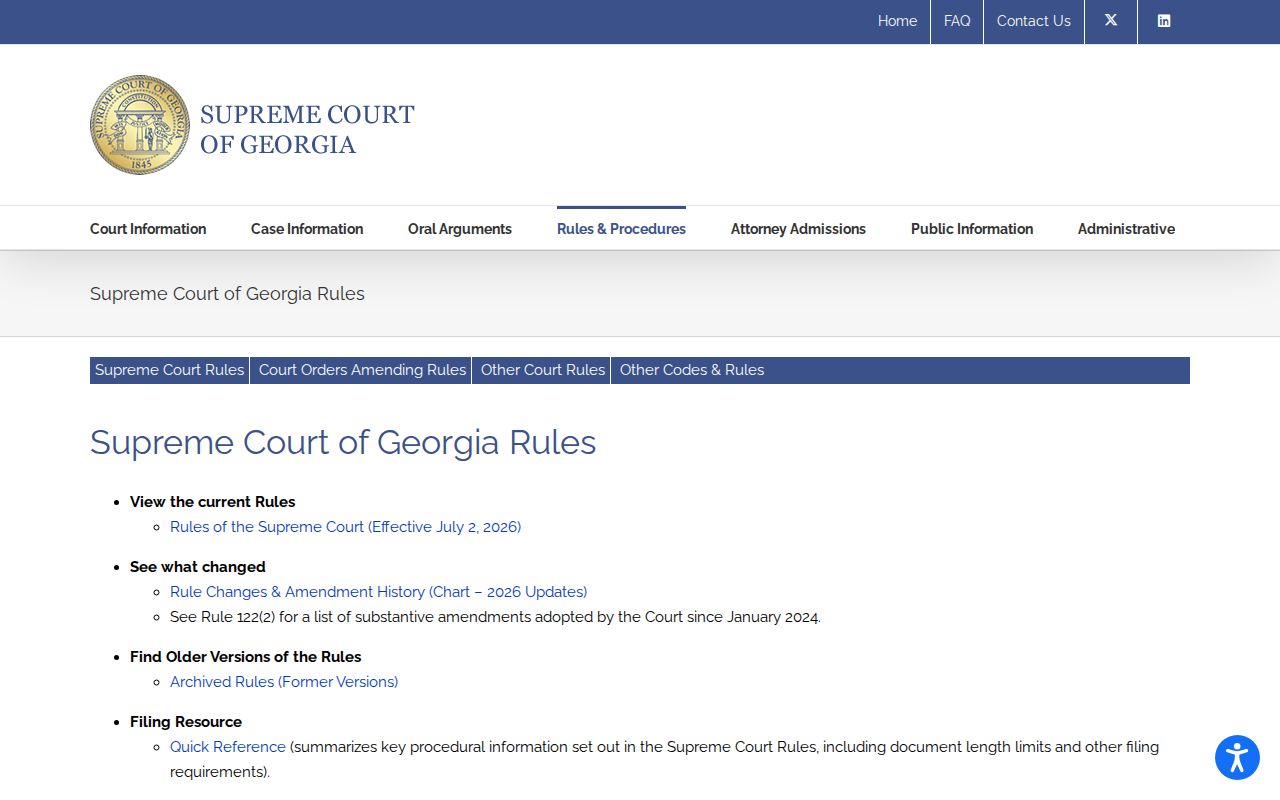
Not every paper in a Decatur County docket is open. Juvenile matters, sealed cases, protected identifiers, and certain adoption or Probate material can all be restricted. Sealed documents can be too. When a document link comes back blank, the reason is likely limited access. It does not mean the case has no history at all. If a filing seems missing from the court docket, give the clerk some specifics. Name the court, the case number, and the exact document or event you want. The Georgia Supreme Court rules page lays out the governing rules.
Seeing a protected identifier in a Decatur County court docket does not make it yours to share. Public access stops at redistribution of those full identifiers. Report anything sensitive to the clerk who holds the record rather than copying it anywhere public.
Decatur County Drug Court Docket
The state Criminal Justice Coordinating Council keeps a graduation listing. It includes a Decatur County Drug Court graduation on May 14, 2026. That tells a reader the accountability-court program is live. It says nothing about any one participant's case result. Before calling a disposition, tie the program reference back to the underlying docket entry. The Decatur County entry is what governs the case.
A graduation notice or program calendar can explain why a case carries a specialty-court reference. What it cannot do is open the file. Filings, treatment records, and orders stay restricted unless the court grants access. The criminal docket itself governs the case history.
For the public event source, use the official Criminal Justice Coordinating Council graduation listing.
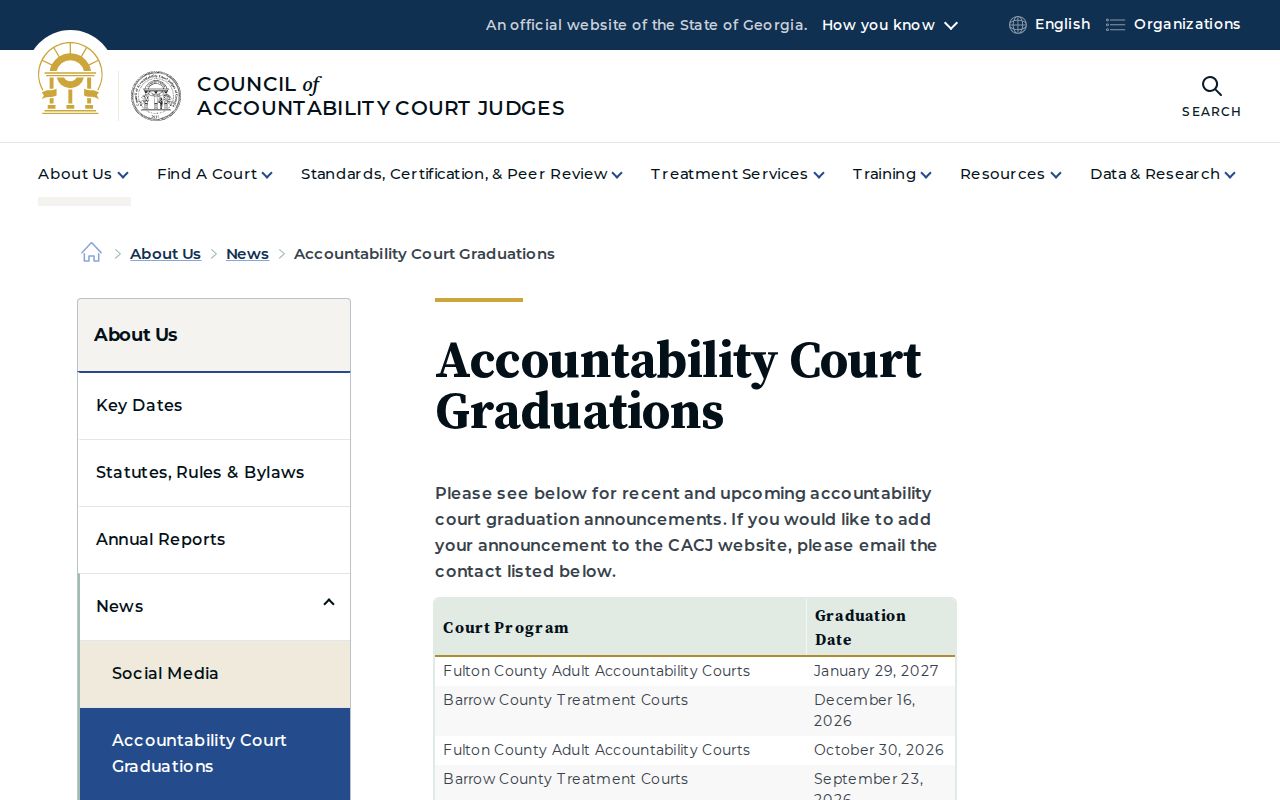
Read it narrowly. The public source proves a program and an event exist, while the Decatur criminal docket alone controls the case-specific history, setting, and disposition.